THE MAKEUP LEXICON
Color cosmetics rely on polymer chemistry, refractive index matching, and surface-treated mineral pigments. Here is what common makeup descriptors actually mean inside the formulation vessel.
CHECK THE CLAIMEMULSIONS, FILM FORMERS & OPTICAL BLUR
The Myth of "Silicone vs. Water" Primer Pilling
A pervasive rule on beauty forums claims that applying a silicone-based foundation over a water-based moisturizer causes immediate pilling because "oil and water repel." In reality, virtually all liquid foundations are emulsions—either Oil-in-Water (O/W) or Water-in-Silicone (W/Si)—stabilized by emulsifiers like PEG-10 Dimethicone or Cetyl PEG/PPG-10/1 Dimethicone.
Most liquid foundations list Aqua (Water) as their very first ingredient, followed immediately by volatile silicones or alkanes. Pilling occurs far more frequently when:
- High-molecular-weight rheology modifiers (xanthan gum, carbomer, or heavy crosspolymers) roll up under repetitive finger friction before the volatile solvent flashes off.
- Too much product is layered without allowing 60–90 seconds for film coalescence.
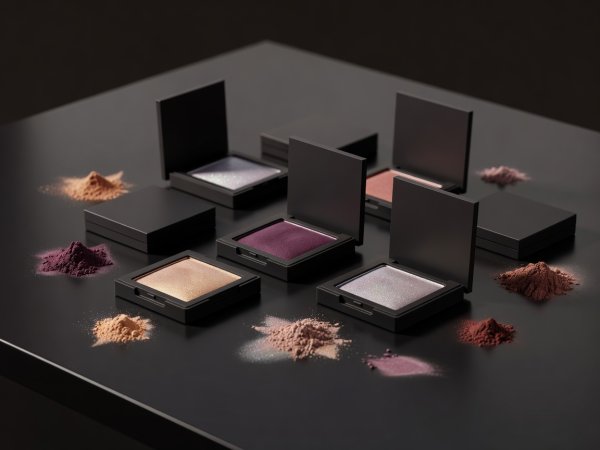
How "HD" and "Blurring" Powders Scatter Light
Human skin has a refractive index of roughly 1.55. When light hits a pore depression, it casts a micro-shadow. Spherical silica, polymethylsilsesquioxane, and boron nitride particles act like microscopic ball bearings that fill surface micro-relief and scatter light at wide angles (diffuse reflection), erasing the dark shadow edge without heavy pigment opacity.
DECODING EVERYDAY MAKEUP TERMINOLOGY
Origin of the Score: The famous 0-to-5 comedogenicity scale circulated online stems largely from rabbit ear assays conducted in the 1970s and 1980s (Kligman & Mills), where neat (100% pure) raw materials like isopropyl myristate or cocoa butter were applied under occlusion to the inner ear of New Zealand white rabbits.
Why It Fails Shoppers: Rabbit ear follicles are far more sensitive than human facial skin, and an ingredient that triggers microcomedones at 100% concentration often shows zero comedogenicity when diluted to 2% inside a finished foundation. Today, "non-comedogenic" has no standardized statutory test method; a finished human repeat patch/follicular biopsy test is the only meaningful measure, and even then individual sebum composition varies wildly.
What Actually Happens: Consumers say a foundation "oxidized" whenever it darkens or shifts peach/orange within an hour of wear. True chemical oxidation of iron oxide pigments (CI 77491, CI 77492, CI 77499) is rare because iron oxides are already oxidized iron minerals.
The Real Culprits: First, as water and volatile solvents evaporate from the wet emulsion, the refractive index of the medium surrounding the pigment particles changes, making the dry film appear 0.5 to 1.5 shades deeper. Second, if the iron oxides are uncoated, facial sebum wets the raw pigment surfaces, shifting their light absorption toward warmer, darker tones. High-end foundations coat iron oxides in methicone, triethoxycaprylylsilane, or amino acids (like sodium lauroyl glutamate) so sebum cannot wet the pigment core.
The Formulation Split: In professional theatrical and editorial makeup, a hydrating mist containing water, glycerin, and butylene glycol merges powdery layers together so they look skin-like, but it does not lock pigment against rubbing. A true long-wear fixing spray relies on film-forming polymers—such as PVP, AMP-Acrylates/Allyl Methacrylate Copolymer, or Acrylates Copolymer—often paired with denatured alcohol to speed drying and form a water-resistant polymer shield.
PIGMENT NOMENCLATURE & COLOR ADDITIVE RULES
Unlike skincare ingredients, color additives in the United States (21 CFR Parts 73 and 74) and the European Union (Annex IV) face strict pre-market approval and batch certification. Here is how to identify what gives your makeup its hue.
| Pigment / Colorant Group | Colour Index (CI) / FDA Name | Chemical Nature | Cosmetic Behavior & Regulatory Notes |
|---|---|---|---|
| Iron Oxides | CI 77491 (Red), CI 77492 (Yellow), CI 77499 (Black) | Synthetic inorganic mineral oxides | Backbone of all skin-tone foundations and concealers; also absorbs visible blue light (400–450 nm), aiding melasma protection |
| Titanium Dioxide | CI 77891 | Inorganic white mineral pigment | Provides opacity and coverage; causes camera flashback if paired with high levels of uncoated silica under direct flash |
| Ultramarines & Ferric Ferrocyanide | CI 77007, CI 77510 | Inorganic blue/violet pigments | Approved for eye area use in the US, but restricted in lip products |
| Carmine (Cochineal Extract) | CI 75470 | Aluminum lake of carminic acid (insect-derived) | Eye-safe classic crimson pigment; not vegan; rare IgE-mediated allergy documented in sensitized individuals |
| Organic D&C Red Lakes | CI 15850 (Red 7 Lake), CI 45410 (Red 27/28 Lake) | Synthetic organic dyes precipitated onto an inert substrate | Deliver vivid neon pinks/reds; approved in EU for eye use, but US FDA restricts them from the immediate eye area ("Pressed Pigment" warning) |