Formulation Chemistry • File 01

INGREDIENT FILES

Single hero ingredients rarely work in isolation. An active compound's real-world effect depends on its vehicle polarity, pH environment, airless packaging stability, and whether human trials tested the exact derivative printed on your bottle.

CHECK THE CLAIM

HOW TO READ AN INGREDIENT CLAIM

During the past decade, skincare marketing shifted from vague botanical storytelling to percentage wars—bottles boasting 20% vitamin C, 15% niacinamide, or 30% acid peels. While transparency around percentages appears scientific, higher concentration does not linearly increase biological benefit. Past a compound's saturation point or receptor capacity, extra active material simply sits on the stratum corneum and triggers irritation.

Furthermore, formulators often employ derivative substitution. A brand may cite peer-reviewed dermatology literature performed on pure L-ascorbic acid or prescription tretinoin, while formulating their actual serum with ascorbyl palmitate or retinyl propionate because the ester is cheaper, won't turn brown in a clear dropper bottle, and stings less. Understanding the chemical difference between a parent molecule and its ester or salt is the fastest way to audit a skincare purchase.

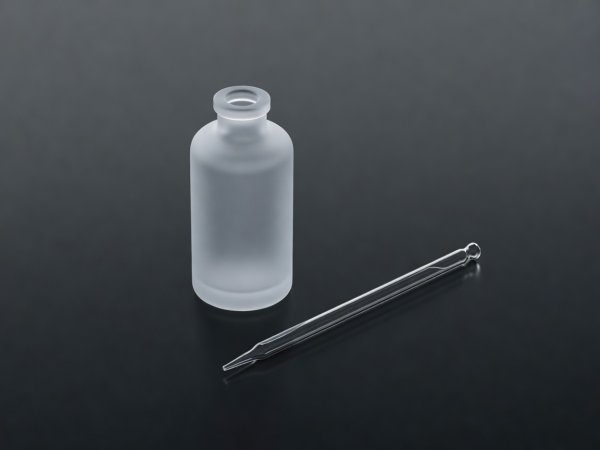
Soft-lit 3D render of an opaque serum vessel and glass pipette on a dark minimalist laboratory surface
Bench Reality

Why Vehicle Design Dictates Delivery

Partitioning out of the formula into the skin requires thermodynamic push. If a lipophilic active is dissolved in an overly comfortable oil base that it "likes" too much, it remains trapped in the lotion rather than diffusing into the epidermis.

VITAMIN A DERIVATIVES & NIACINAMIDE

INCI: Retinol / Retinal / Hydroxypinacolone Retinoate

The Retinoid Conversion Ladder

Skin cells possess nuclear receptors specific to all-trans retinoic acid (tretinoin), a prescription drug. Cosmetic retinoids must undergo enzymatic oxidation inside keratinocytes before they can bind these receptors:

  • Retinyl Palmitate / Propionate: 3 conversion steps. Useful as an antioxidant; weak structural remodeling evidence at cosmetic levels.
  • Retinol (0.1% – 1.0%): 2 conversion steps (retinol → retinaldehyde → retinoic acid). Well-supported in controlled human trials for reducing fine rhytids, provided packaging excludes oxygen and light.
  • Retinaldehyde (0.05% – 0.1%): 1 conversion step. Strong clinical support with good tolerability.
INCI: Niacinamide (Vitamin B3)

The 2% to 5% Sweet Spot

Niacinamide is water-soluble, photostable, and serves as a precursor to NAD+ and NADP+ coenzymes. Peer-reviewed human studies demonstrate that concentrations between 2% and 5% increase endogenous ceramide and free fatty acid synthesis, reduce transepidermal water loss, and inhibit melanosome transfer from melanocytes to keratinocytes.

The 10%–20% Hype Check: No robust clinical evidence shows that 10% or 20% niacinamide outperforms 5%. Higher levels frequently provoke flushing (especially if trace nicotinic acid impurities are present) and follicular stinging.

INCI: Ascorbic Acid vs. Derivatives

Vitamin C Stability Constraints

Pure L-ascorbic acid has the strongest human data for photoprotection synergy and collagen synthesis support—specifically when formulated at 10% to 20% in an aqueous vehicle at a pH below 3.5 (per classic Pinnell et al. absorption studies) and stabilized with ferulic acid and tocopherol.

Derivatives like Sodium Ascorbyl Phosphate (SAP), Magnesium Ascorbyl Phosphate (MAP), and Tetrahexyldecyl Ascorbate remain stable at neutral pH 6–7, but human in vivo proof that they convert to active ascorbic acid in equivalent quantities remains far thinner.

HYDROXY ACIDS, CERAMIDES & PRESERVATIVES

When evaluating exfoliants and barrier repair agents, look beyond the front-label callout. Desquamation (shedding of dead corneocytes) and lipid replenishment follow strict physicochemical ratios.

Ingredient Class & INCI Examples Primary Cosmetic Function Effective Study Range Key Formulation Caveat
Alpha Hydroxy Acids (AHA)
Glycolic Acid, Lactic Acid, Mandelic Acid
Loosens corneodesmosome cohesion in upper stratum corneum; humectant binding 5% – 10% daily; pH 3.4 – 4.0 Increases UV sensitivity (FDA advises sunburn alert label); free acid drops sharply above pH 4.2
Beta Hydroxy Acid (BHA)
Salicylic Acid
Lipophilic desquamation; penetrates sebum-rich follicular ostia 0.5% – 2.0% Less pH-dependent than glycolic acid in hydroalcoholic or surfactant vehicles
Polyhydroxy Acids (PHA)
Gluconolactone, Lactobionic Acid
Gentle surface exfoliation plus strong multi-hydroxyl humectancy 4% – 10% Larger molecular size slows penetration, minimizing neurosensory stinging
Ceramides
Ceramide NP, AP, EOP + Cholesterol + Fatty Acids
Restores intercellular lamellar lipid bilayers Molar ratio matters (~3:1:1 or equimolar lipid blend) Trace "dusting" of 0.001% ceramide without cholesterol and fatty acids offers negligible barrier repair
Preservatives
Phenoxyethanol, Methylparaben, Sodium Benzoate
Prevents bacterial, yeast, and mold contamination during consumer use 0.2% – 1.0% (regulated upper limits) Parabens remain among the least sensitizing preservatives in patch-test registries despite marketing fear