How to Estimate Where the 1% Line Sits
Under both US FDA labeling regulations (21 CFR 701.3) and EU Regulation (EC) No 1223/2009, ingredients present at a concentration greater than 1% must be listed in strict descending order of weight. Once the formula crosses below the 1% mark, brands may list ingredients in any order they choose (followed by color additives at the very end).
Marketers routinely exploit this rule through "fairy-dusting": adding 0.005% of an expensive peptide or exotic botanical extract, then placing it immediately after the 1% boundary so it appears mid-way up the ingredient list ahead of thickeners and preservatives.
Practical Marker Ingredients: Because certain functional ingredients are almost never used above 1%, you can use them as visual landmarks to locate the 1% border:
- Phenoxyethanol: Capped by law at 1.0% maximum in the EU and standardly dosed at 0.5%–0.9%.
- Xanthan Gum & Carbomer: Polymeric thickeners typically dosed between 0.2% and 0.6%.
- Sodium Hyaluronate (pure powder): Forms a thick gel at 0.5% to 1.0% (beware brands claiming "75% hyaluronic acid"—they are measuring a 1% aqueous stock solution).
- Parfum / Fragrance: Usually under 1% in facial skincare.
Packaging Icons
PAO Open Jar vs. Hourglass Icon (BBD)
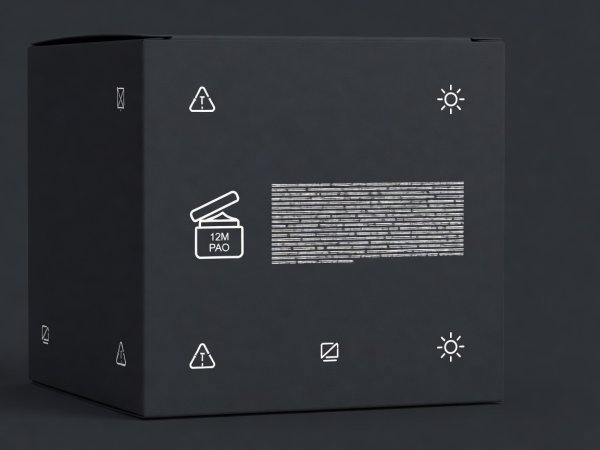
If an unopened product has a verified stability shelf life over 30 months, EU/UK labels print the Period After Opening (PAO) jar icon (e.g., 6M or 12M). If stability is 30 months or less, a mandatory hourglass symbol or "Best Before End" date must appear instead.